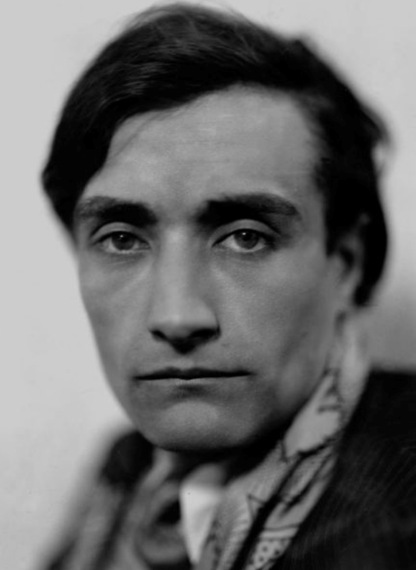
Artaud is most famous for his book ‘The Theatre and It’s Double.’ His work has profound impact on the evolution of contemporary theatre to this day, evolving from his observations of cinema, theatre and art. Artaud was indeed banished from the surrealist movement and yet his only produced film ‘The Seashell and the Clergyman’ is perceived to be the first tangible example of surreal concepts and ideas explored in cinematography.
‘His work is a painful movement through many silences and journeys. Points of apparently intractable breakdown are twinned with sudden breakthroughs into physical and linguistic intensity.’
Stephen Barber
What to expect from FILLE DE MON COEUR (Daughter of my Heart)
FILLE DE MON COEUR (Daughter of my Heart) explores the ‘essence’ of the famous idiosyncratic French writer Antonin Artaud (1896-1948) and his complicated relationship with French actress Colette Thomas. Thomas was one of several women who was part of Artaud’s ‘daughter’s of the heart.’ Thomas was drawn to Artaud, like a moth to a flame, vulnerable and yet completely engulfed by his methods of intense rehearsals.
This performance will be an emotive visceral immersive experience that explores through movement, poetry and multimedia; the last five years of Artaud’s life from Rodez Asylum to his final moments at the Ivry-sur-Seine. Artaud spent his life subjected to many horrors; unable to have his ideas for: cinema, theatre, art or radio fully realised in performance – and yet despite his suffering, psychosis and internment – he had an unwavering desire to continue living. Expect a fusion of physical theatre, poetry, Shakespeare, mime and multimedia. The human behind the stereotype – the raw response through movement and at times the quiet ‘little celestial poet.’
‘I just like to tell stories and in doing so I have tried to remain empathetic towards Antonin Artaud and Colette Thomas, forever amending ideas based on on-going research of Artaud after many years. I seek to not replicate his style but explore elements of his character through more visceral episodes of emotional states.’
Natasha Higdon

 thewritersmark.co.uk